Media Monitoring1 October 20267 min read
Social Media Search Engines in 2026: What You Can Actually Search
Reddit's instructions to every search engine are two lines long, and the second one is Disallow. What eight platforms permit, what you can still search for free, and the point at which searching stops being the right verb.
 Anil SalviCMO and co-founder, BrandRobin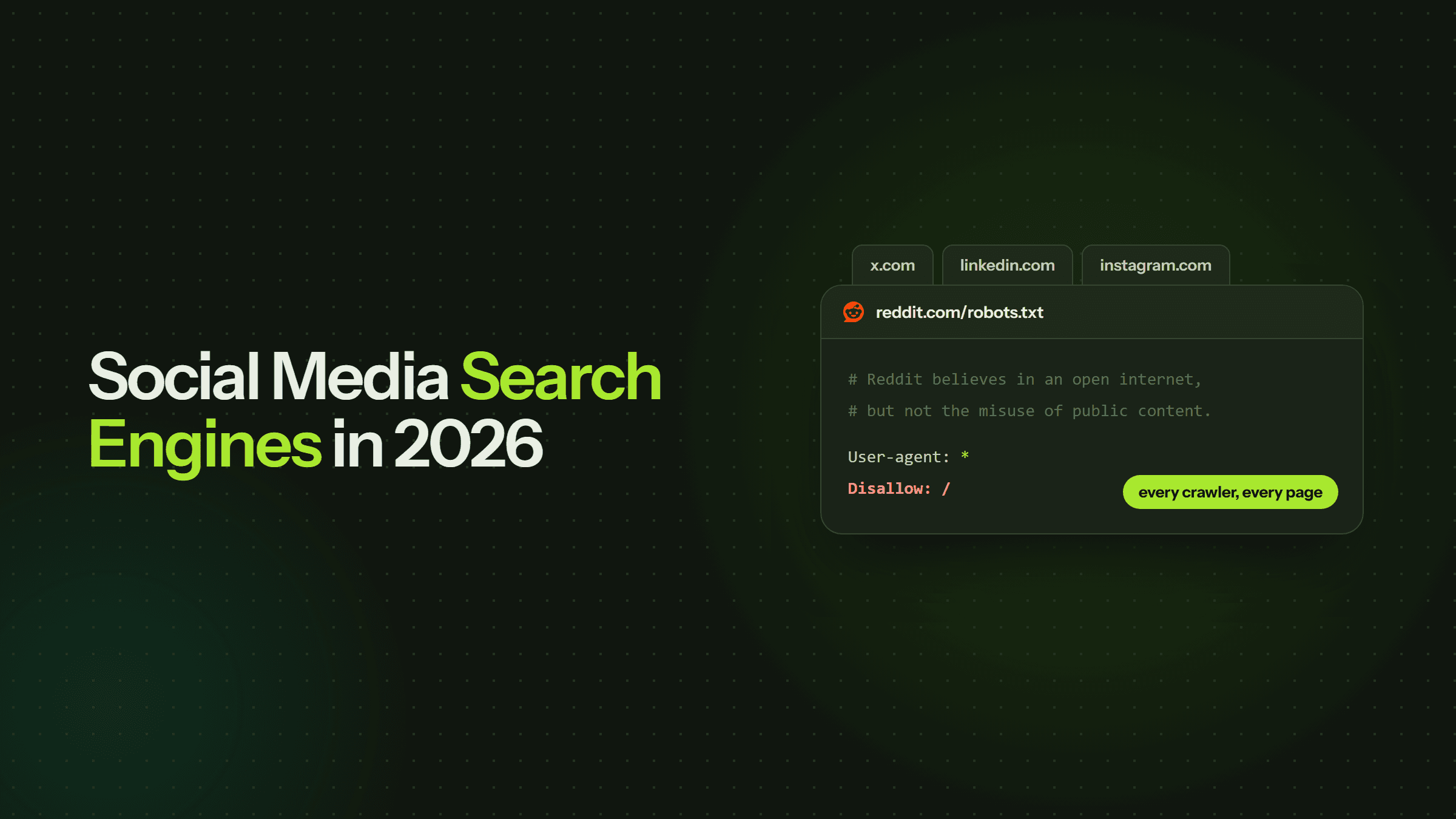
I set out to compare the search engines people use to find what is being said about them, and I got stopped twice before I had finished taking the screenshots for this post.
X returned "Access to x.com was denied". Reddit showed me a CAPTCHA that said "Prove your humanity". Neither of those is a complaint. They are the answer to the question the whole category dances around: what are these search engines actually allowed to search?
So I read the instructions each platform publishes to the world's crawlers, and then I sat with ten tools and searched the same brand in each of them.
Some of what gets sold as a social media search engine is very good. Some of it is a set of links to other people's search boxes. One of the best things here is free, has no marketing, and most marketers have never opened it.
Ours is in the list too, first, and it is the one that is not a search engine at all. I will explain why it is here and what it cannot do.
Everything was read from each tool and each platform's own files on 1 October 2026.
The ten, side by side
Click a tool to jump to its section.
| Tool | What it searches | Price | The catch |
|---|---|---|---|
 BrandRobin BrandRobin | 17 named channels, continuously | Free 7-day trial, paid plans unpriced | Not a search box; it monitors instead |
 Google Google | Whatever each platform permits | Free | Blind wherever robots.txt says so |
| Google Alerts | Web and news, as they appear | Free | Barely touches social |
| Social Searcher | Several networks, one box | Free tier, paid plans | Depth varies by network |
| Boardreader | Forums and message boards | Free | A narrow slice of the web |
 Hacker News Search Hacker News Search | All of Hacker News | Free, API included | One community only |
 Bluesky Bluesky | Bluesky posts, with operators | Free | Pushes you to sign in |
 X advanced search X advanced search | X, with the best operator set | Free with an account | Nothing without logging in |
 Reddit search Reddit search | Reddit, natively | Free | Worse at Reddit than Google is |
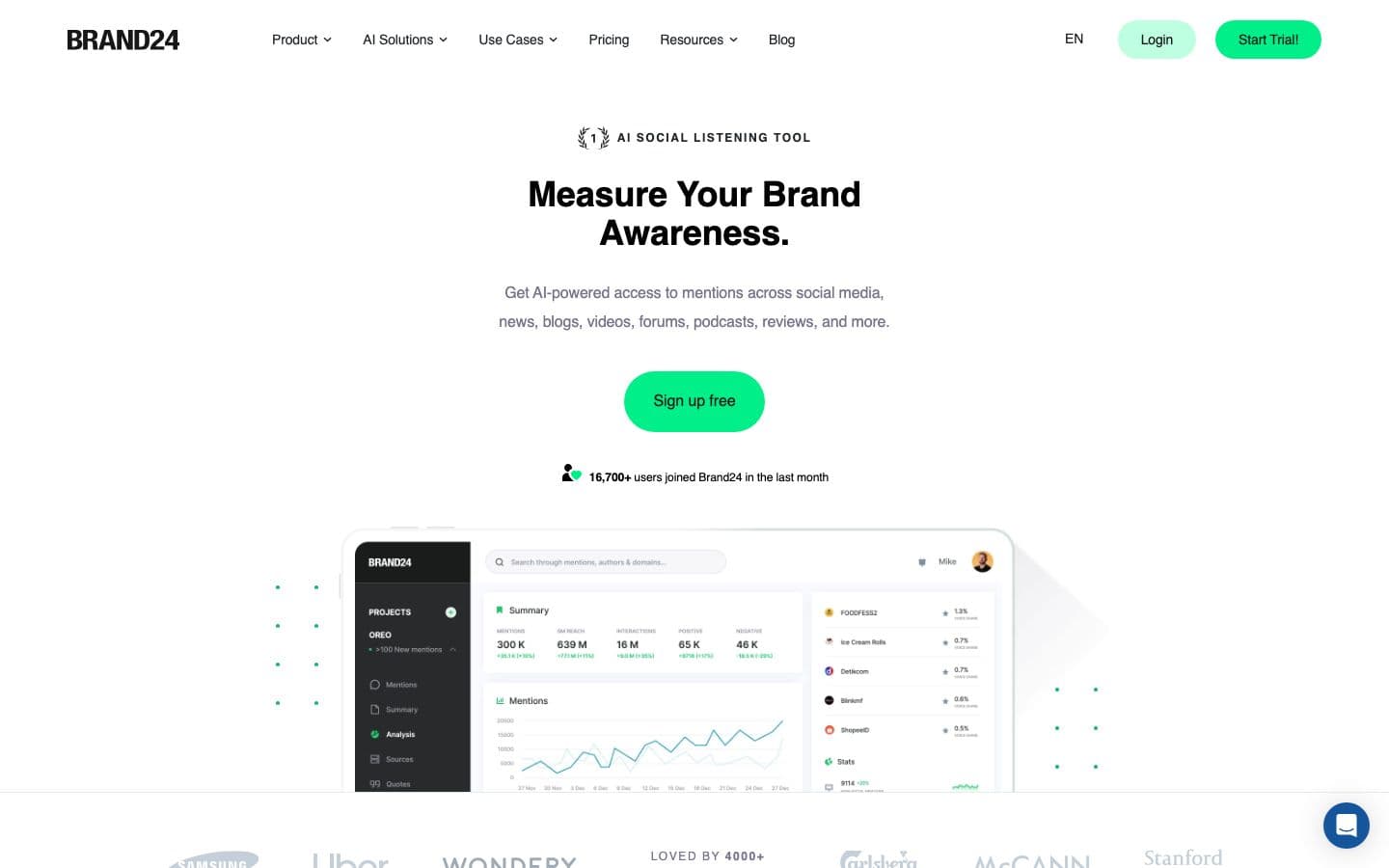
 Brand24 Brand24 | A paid index across channels | From $199/mo billed annually | A subscription, not a search box |
What the platforms tell search engines, in writing
Before the tools, the constraint they all share. A robots.txt file is a platform's public instruction to every crawler on the internet, and it is the least ambiguous thing any of these companies says about who may read them at scale.
| Platform | What its robots.txt says | What that means when you search |
|---|---|---|
| User-agent: * — Disallow: / | No crawler is permitted. Google shows Reddit under an agreement, not an open door | |
| X | Googlebot and Bingbot get a short allow-list; /search/realtime and /search/users are disallowed | Search pages are off-limits to indexers, and logged-out search shows a wall |
| Googlebot is disallowed from /feed/update/ | That is the address of every post, so posts are not in the index | |
| Amazonbot, ClaudeBot, GPTBot, PerplexityBot, Google-Extended: Disallow: / | No public keyword search worth the name | |
| Threads | Automated collection 'prohibited unless you have express written permission' | The same posture, in plainer English |
| YouTube | Disallow: /comment, among others | Videos are searchable. The comments underneath them are not |
| Bluesky | Allow: / | The only large network whose file says yes |
| Hacker News | Open, with Crawl-delay: 30 | Fully searchable, and it shows |
Read the right-hand column from top to bottom and the category rearranges itself. The two platforms nobody markets at you are the two you can actually search. The ones every tool advertises are the ones nobody is allowed to index.
How I compared them
Five things, and they decided every pro and con below.
- What it is actually permitted to see. Not the number of networks on the homepage. The ones its own supply allows it to return, which is a different and much shorter list.
- Whether it works without an account. A search engine you have to log in to is a feature of a platform, not a search engine. I checked each one cold, in a clean browser.
- The operators. Date bounds, author, engagement thresholds, exclusions. Operators are the difference between a search and a scroll, and the good free tools have better ones than most paid dashboards expose.
- Whether anything is kept. A search box shows you now. Something that keeps a record can show you the month you were not looking, and almost nothing free does.
- What happens when you are not at the keyboard. The mention that costs money arrives on a Saturday. Search cannot help with that by definition.
Three different things get sold as a social media search engine
Redirectors. You type once, they open eight native searches in eight tabs. Nothing is unified and nothing is stored, which is why they are free.
Aggregators with their own supply. They keep an index, which means they obtained the content somewhere: an API they pay for, an agreement, or a scraper. Quality and legality both follow from which one, and it is the question nobody asks.
The general web index. Google and Bing with site: operators. Free,
enormous, already built, and limited to whatever each platform permits.
A fourth group keeps being sold as the other three: the platforms' own search boxes. They are the primary source, they are free, and on two platforms they are better than anything built on top of them.
BrandRobin
Ours, and first because it is ours. It is also the only thing on this page that does not belong in a list of search engines, which is worth saying before the pros.
Ours
- Best for
- Teams who have stopped searching and want something watching
- Starting price
- Free for the 7-day trial. Paid plans are not priced yet
- Free trial
- 7 days, no card
Pros
- Seventeen named channels read continuously, including Reddit, X, LinkedIn, YouTube, Quora, reviews, news, blogs and podcasts.
- The last 30 days are backfilled on day one, so you start with the month you were not watching.
- Buyer signals sit in a separate feed from mentions, which is the distinction a search box cannot draw.
- An AI analyst that answers from your own mentions, with the post behind each claim linked.
Cons
- Not a search engine. There is no public box to type a stranger's brand into, and no free ad-hoc lookup.
- We have not set a price, so the only number here is the length of the trial.
- Nothing for Instagram, Threads or TikTok, for the reasons in the table above.
- No API or MCP server yet, so the data does not leave on its own.
The catch: if what you want is to check a competitor's name once this afternoon, close this tab and use the free stack below. It will serve you better and cost nothing. We are the answer to a different question, which is what happened last month while nobody was searching.
Google
- Best for
- Almost everyone, almost always, for free
- Starting price
- Free
- Free trial
- No account needed
Pros
- site:reddit.com "your brand" is better at finding Reddit threads than Reddit's own search, because Google only has to answer the question.
- Works the same way on any forum, any news site and any blog your market reads.
- No account, no limits worth worrying about, and operators you already know.
- Google is the one crawler Reddit has an agreement with, so its Reddit coverage is real rather than scraped.
Cons
- Blind wherever a robots.txt says so: X search pages, LinkedIn post URLs, most of Instagram.
- No alerting, no record, and no idea that two results are the same story syndicated twice.
- Ranking is tuned for relevance, not recency, so a loud thread from yesterday can sit below an old one.
The catch: it is the best free social search engine, and it is not a social search engine. You are searching Google's copy of whatever leaked out, which on some platforms is most of it and on others is nothing.
Google Alerts
- Best for
- A free tripwire on your own name, set up in two minutes
- Starting price
- Free
- Free trial
- A Google account
Pros
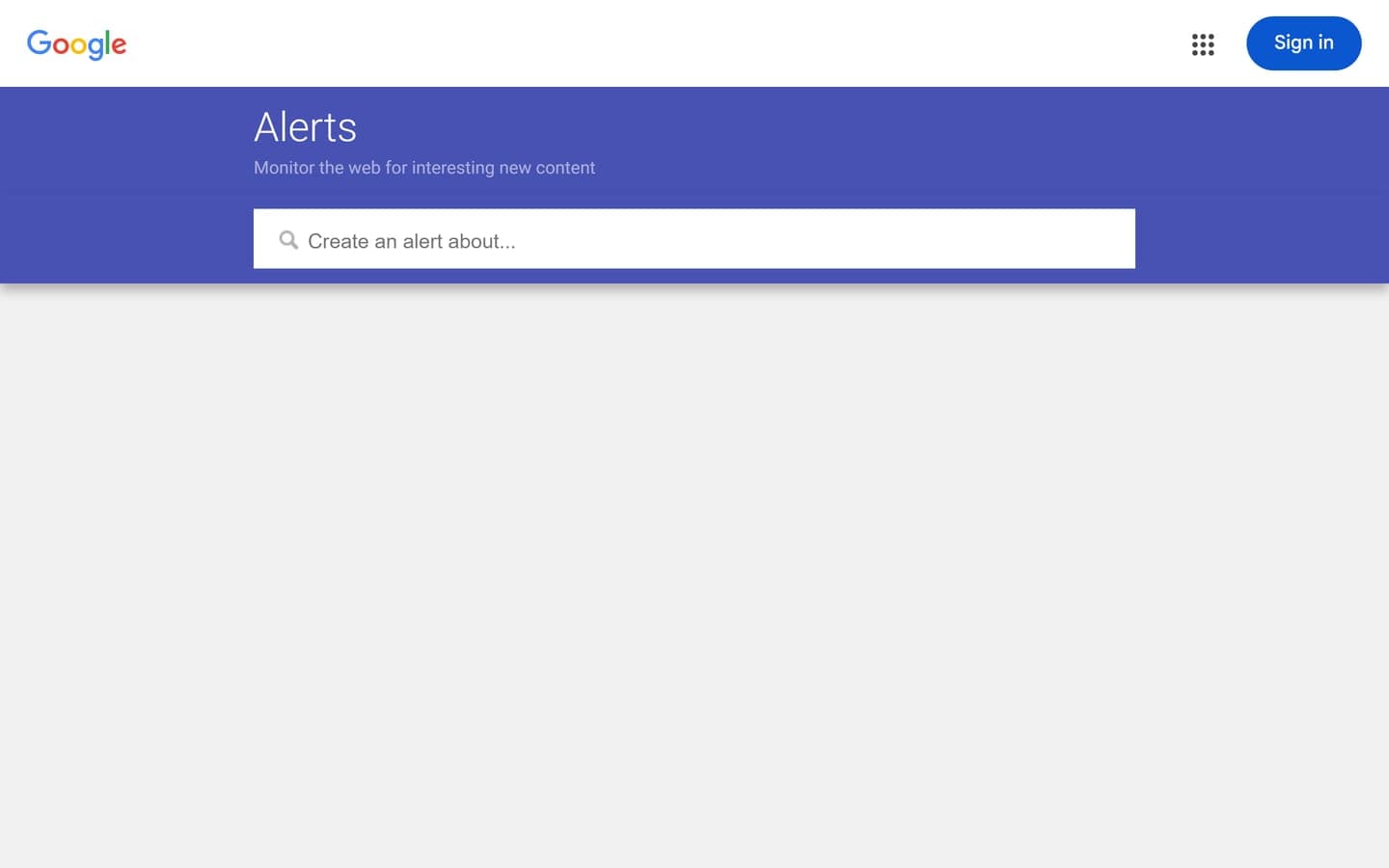
- The only free thing here that tells you without being asked.
- Two minutes to set up, and you can have one per brand, product and competitor.
- Good on news and blogs, which is where a reputational story usually starts.
Cons
- It inherits Google's blind spots, so most social platforms are simply absent.
- Delivery is erratic: some alerts arrive within the hour, some days later, some never.
- No sentiment, no deduplication and no way to see what it missed.
The catch: set it up anyway, today, because free alerting on your own name is strictly better than nothing. Just do not mistake a quiet inbox for a quiet month.
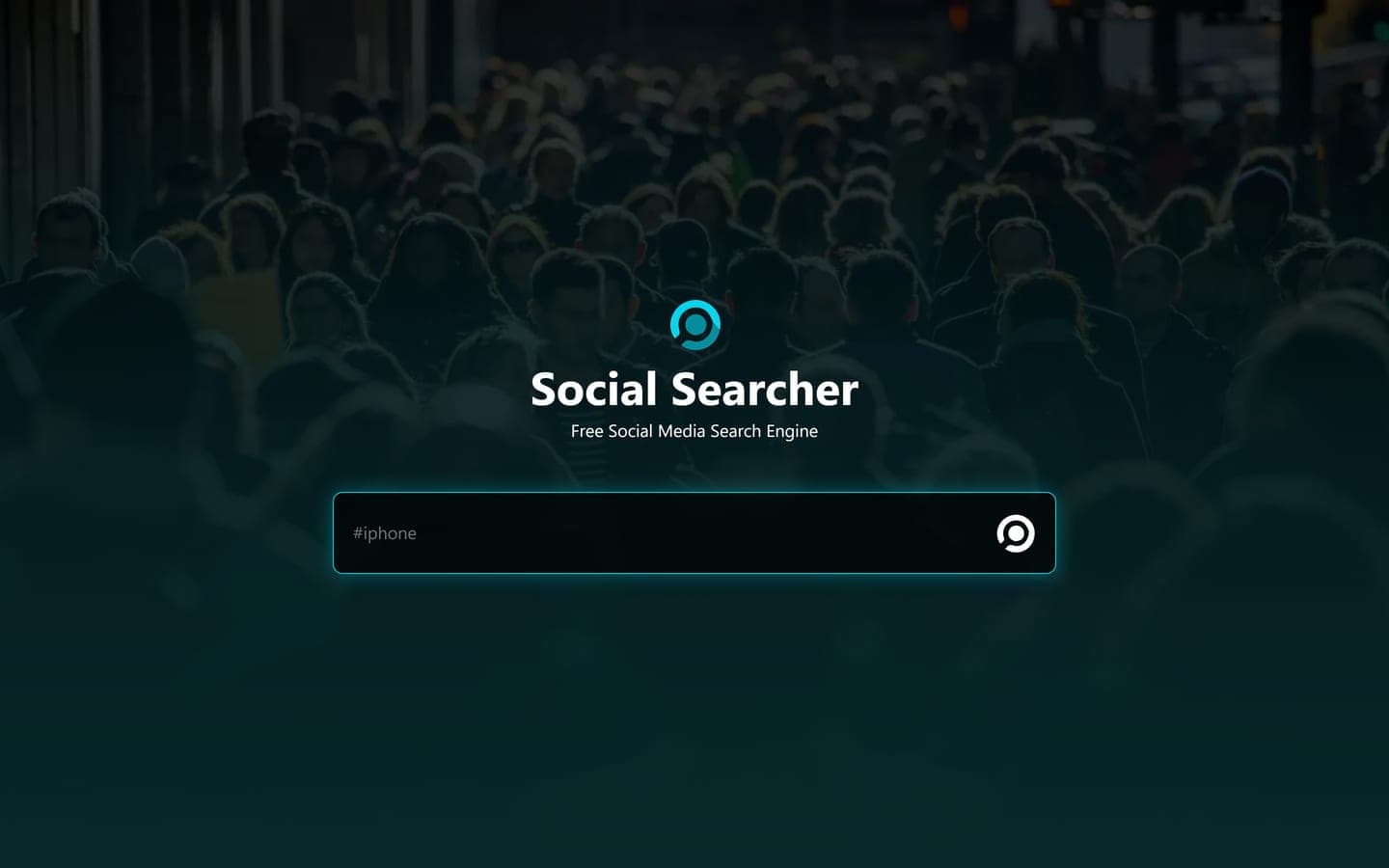
Social Searcher
- Best for
- One box across several networks, with no account
- Starting price
- Free tier; paid plans advertised
- Free trial
- No account needed to search
Pros
- Genuinely free to try, with no signup wall before the first search.
- Returns results from several networks in one view rather than sending you to eight tabs.
- Describes itself plainly as a free social media search engine, which is more than most do.
Cons
- Depth varies a lot by network, for the reasons in the robots.txt table.
- Its pricing page did not load for us on 1 October 2026, so we cannot tell you what the paid tiers cost.
- Nothing is kept for you between searches unless you pay.
The catch: worth a bookmark for a quick sweep. Judge it by which networks it returns anything useful on for your particular brand, not by the number of logos on its homepage.
Boardreader
- Best for
- Forums and message boards the rest of the web forgot
- Starting price
- Free
- Free trial
- No account needed
Pros
- Searches the forum layer specifically, which is where a lot of durable product discussion still lives.
- Free, with no account and no obvious limit on casual use.
- Useful for categories whose customers never left phpBB, which is more categories than you would think.
Cons
- A narrow slice: no modern social networks and no review sites.
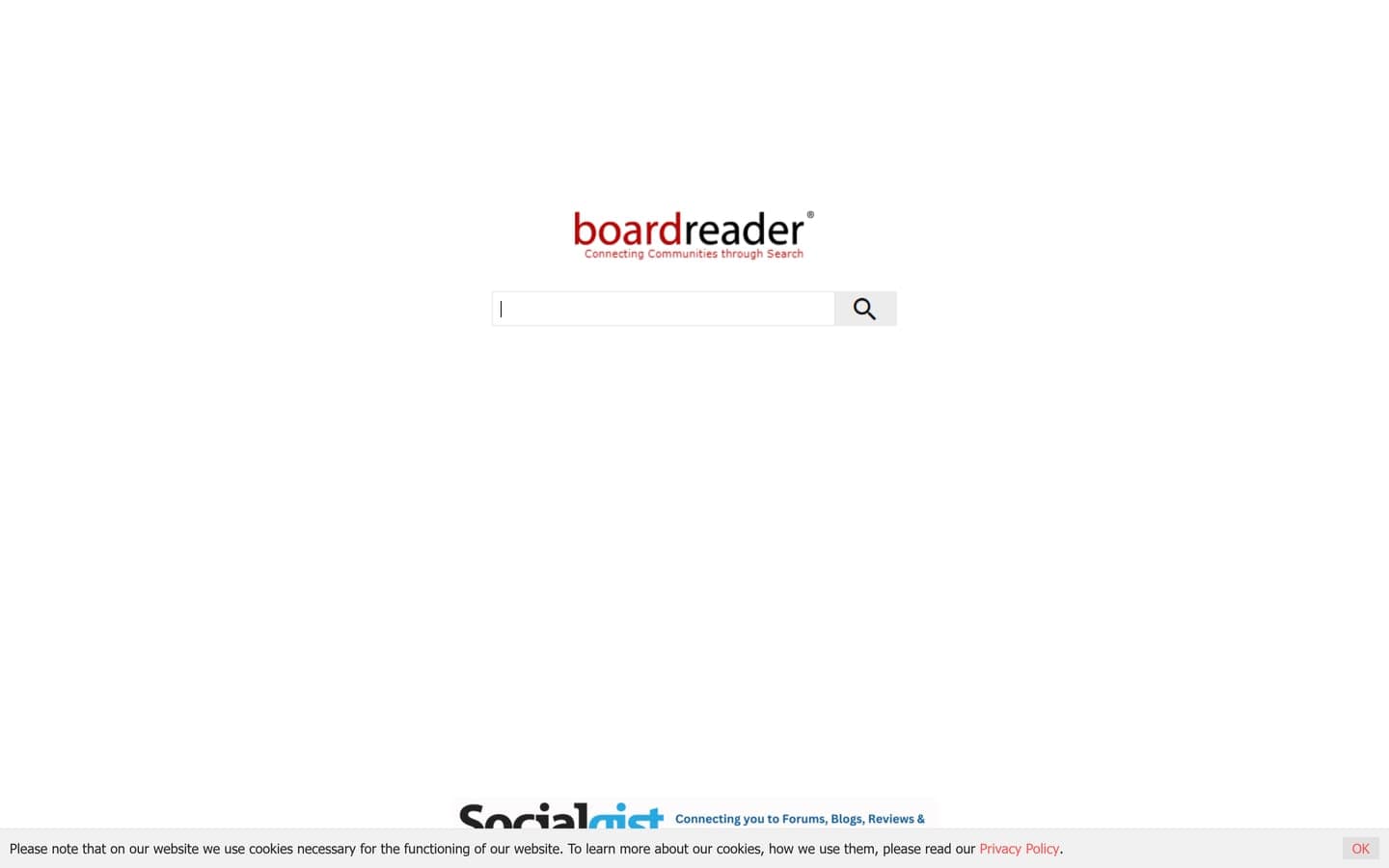
- The interface is from another era, and so is some of the index.
- Operated by Socialgist, a data supplier, which is worth knowing when you think about where results come from.
The catch: nobody should buy anything on the strength of Boardreader, but if your market argues on specialist forums it will find threads that no social tool on this page will.
Hacker News Search
- Best for
- Anyone selling to developers, founders or technical buyers
- Starting price
- Free
- Free trial
- No account needed
Pros
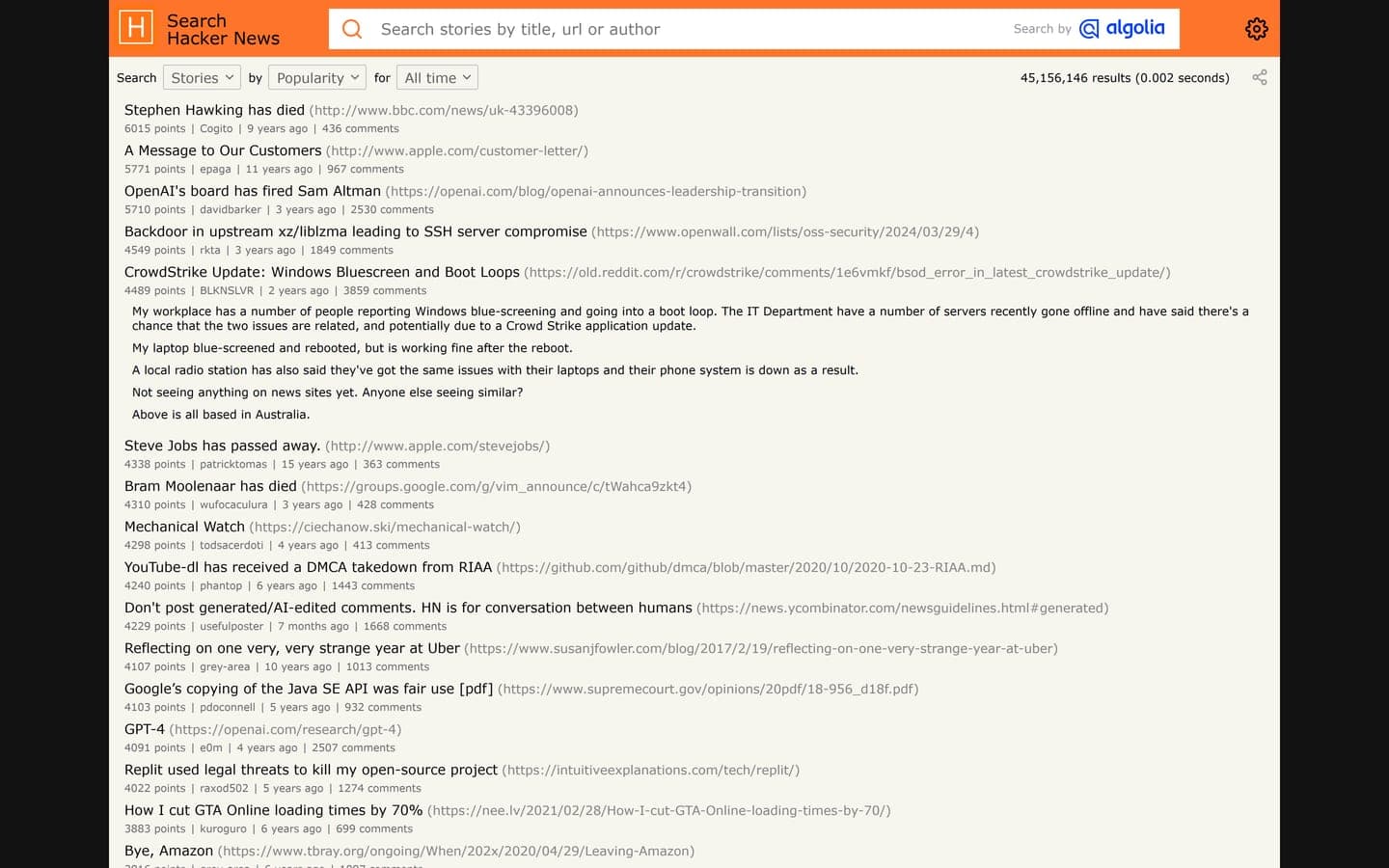
- Fast enough to be startling: our query reported 45,156,146 results in 0.002 seconds.
- Filters by stories, comments, points, date and popularity, and the comment search is the valuable half.
- A free API behind it, so you can automate what the others make you do by hand.
- Fully open, with nothing hidden behind a login.
Cons
- One community. Excellent for B2B software, useless for a restaurant group.
- No alerting, so you still have to remember to look.
- Ranking by popularity buries the quiet thread where somebody is actually asking for a recommendation.
The catch: this is the best free tool on the page by some distance, and the one almost nobody opens. If you sell software, search your own name and your competitors' in the comments, not the stories. That is where the opinions are.
Bluesky
- Best for
- Catching conversations that used to happen on X
- Starting price
- Free
- Free trial
- An account, in practice
Pros
- The only large network whose robots.txt says Allow: /.
- A real operator set: from:, mentions:, since:, until:, lang: and domain:.
- Growing fast enough that category conversation genuinely happens there now.
Cons
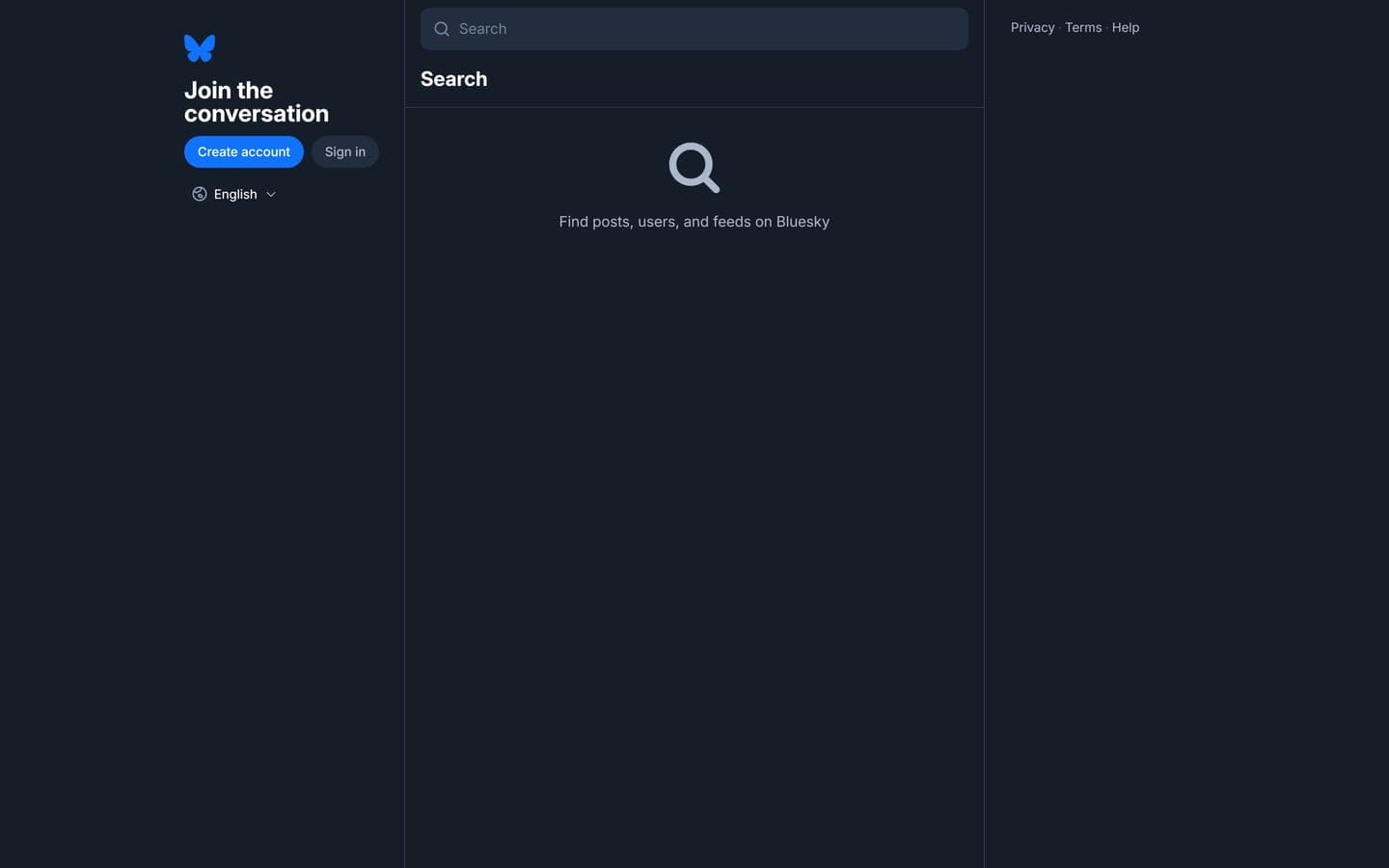
- Searching it logged out pushed us to a sign-in screen rather than to results.
- Its public API refused our request outright on 1 October 2026, so treat 'open' as policy rather than a promise about your experience.
- Smaller than the networks it is replacing, so absence of mentions proves very little.
The catch: the policy is the most open of any large network and the practice was less so on the day I tested it. Make an account, use the operators, and do not assume the API will be there if you build on it.
X advanced search
- Best for
- The richest operator set on any social platform, if you have an account
- Starting price
- Free with an account
- Free trial
- An account is required
Pros
- min_replies: and min_faves: separate a complaint somebody answered from one nobody saw. No other platform gives you that.
- since: and until: bound a search to the week something happened.
- The archive goes back far enough to be useful for anything except a legal matter.
Cons
- Logged-out search shows you nothing at all.
- X tells Google and Bing not to index its search pages, so you cannot get at it sideways either.
- When we tried to capture the search page for this post, X returned 'Access to x.com was denied'. There is no screenshot above for that reason.
The catch: the best operators here belong to the platform that has done the most to make sure nothing else can read it. Use it directly, with an account, and do not expect any tool to reproduce it faithfully.
Reddit search
- Best for
- Searching inside one subreddit you already know matters
- Starting price
- Free
- Free trial
- Works logged out, mostly
Pros
- subreddit: and author: narrow a search properly once you know where to look.
- Sort by new, top or comments, with a time filter, which is more control than most free tools give.
- Comment search exists, and Reddit comments are where products get compared.
Cons
- Worse at finding Reddit threads than Google is, because its ranking also has to serve browsing and voting.
- Reddit's robots.txt disallows every crawler, so nothing else can index it without an agreement.
- Our attempt to capture the search page returned a CAPTCHA reading 'Prove your humanity', which is also what automated access to Reddit looks like now.
The catch: use Reddit's own search when you know the subreddit, and Google
with site:reddit.com when you do not. That single habit will improve your
Reddit research more than any tool purchase.
Brand24
- Best for
- The point at which free search has obviously stopped working
- Starting price
- $199/mo billed annually ($249 monthly), up to $1,499 at Enterprise
- Free trial
- 14 days, no card
Pros
- A paid index across a broad named channel list, with every tier published.
- Alerting, sentiment and reporting, which is the whole of what free search cannot do.
- Unlimited users from the Team plan up.
Cons
- The entry plan is 3 keywords, 2,000 mentions and a refresh twice a day.
- It is a subscription, not a search box: there is no quick lookup of a name you are curious about.
- At $199 a month it is a considered purchase, not something you try on a whim.
The catch: included here as the shape of the paid end rather than as a recommendation over its rivals. If you want that comparison properly, the best social listening tools post does it across ten of them.
What no search box does, at any price
Everything above answers one question: is anyone talking about this right now. Four things none of them do.
They cannot tell you when. Search is a thing you remember to do. The thread that costs you money arrives on a Saturday and search finds it after somebody else has already told you.
They cannot keep a record. Posts get deleted, threads get locked, and a search run today cannot show you last quarter. If nothing was capturing it at the time, that month is gone.
They cannot find what you did not think to type. You search your brand. You do not search the misspelling, the competitor comparison that never names you, or "anyone know a tool that does X", which is the most valuable sentence on the internet for you.
They cannot dedupe or rank. Ten results from one syndicated story look like ten mentions; one Reddit thread with 400 comments looks like one result. Volume read off a search page is the least reliable number in this field, which is why mention counts lie.
Which one I would open first, by situation
| If you are… | Open this | Why |
|---|---|---|
| Past the point of remembering to search | BrandRobin | It watches and backfills; there is nothing to remember |
| Checking a name once this afternoon | Google, with site: | Free, instant, and better than most paid search boxes |
| Selling to developers or founders | Hacker News Search | Free, fast, open, and the comment search is where the opinions are |
| Wanting a free tripwire and nothing more | Google Alerts | Two minutes, and it tells you without being asked |
| Looking across several networks at once | Social Searcher | One box, no account, good enough for a sweep |
| Selling into a forum-shaped market | Boardreader | The forum layer nothing else indexes |
| Investigating one thread in depth | X advanced search, Reddit search | The operators only the platform itself gives you |
| Ready to pay for alerting and history | Brand24 | A published price and the things free search cannot do |
The ten-minute sweep
If you take nothing else from this comparison, take this. It costs nothing.
- 01
Google first, with site:
site:reddit.com "your brand", then the same for news.ycombinator.com and any forum your market lives on. This will outperform most of the purpose-built tools on this page.
- 02
Hacker News comments, if you sell software
Search your name and your two closest competitors at hn.algolia.com, and filter to comments rather than stories. Stories are announcements; comments are opinions.
- 03
X with an account, using thresholds
min_replies:5 on your brand name finds the complaints that got a conversation going, and skips the ones nobody saw. Add since: and until: to bound it to the week you care about.
- 04
Set one Google Alert before you close the tabs
It takes two minutes and it is the only part of this sweep that keeps working after you walk away. It will not catch much social, and it is still better than relying on memory.
What this comes down to
There is no search engine for social media, because the platforms have spent three years making sure there cannot be one. What exists instead is a patchwork: two genuinely open communities with excellent free search, one general web index working from whatever it is permitted to keep, a handful of aggregators whose quality depends entirely on how they got their data, and a set of login walls.
So the question is not which social media search engine is best. It is whether the job in front of you is search at all. If you want to know what is being said right now, the free stack above is as good as anything sold, and I would not spend a dollar on this category until it stops answering. If you want to know what was said while you were not looking, see how social listening works instead. That is a different verb, and it needs a different tool.
Keep reading
Platform Guides
Reddit API Pricing in 2026: The One Number Reddit Ever Published
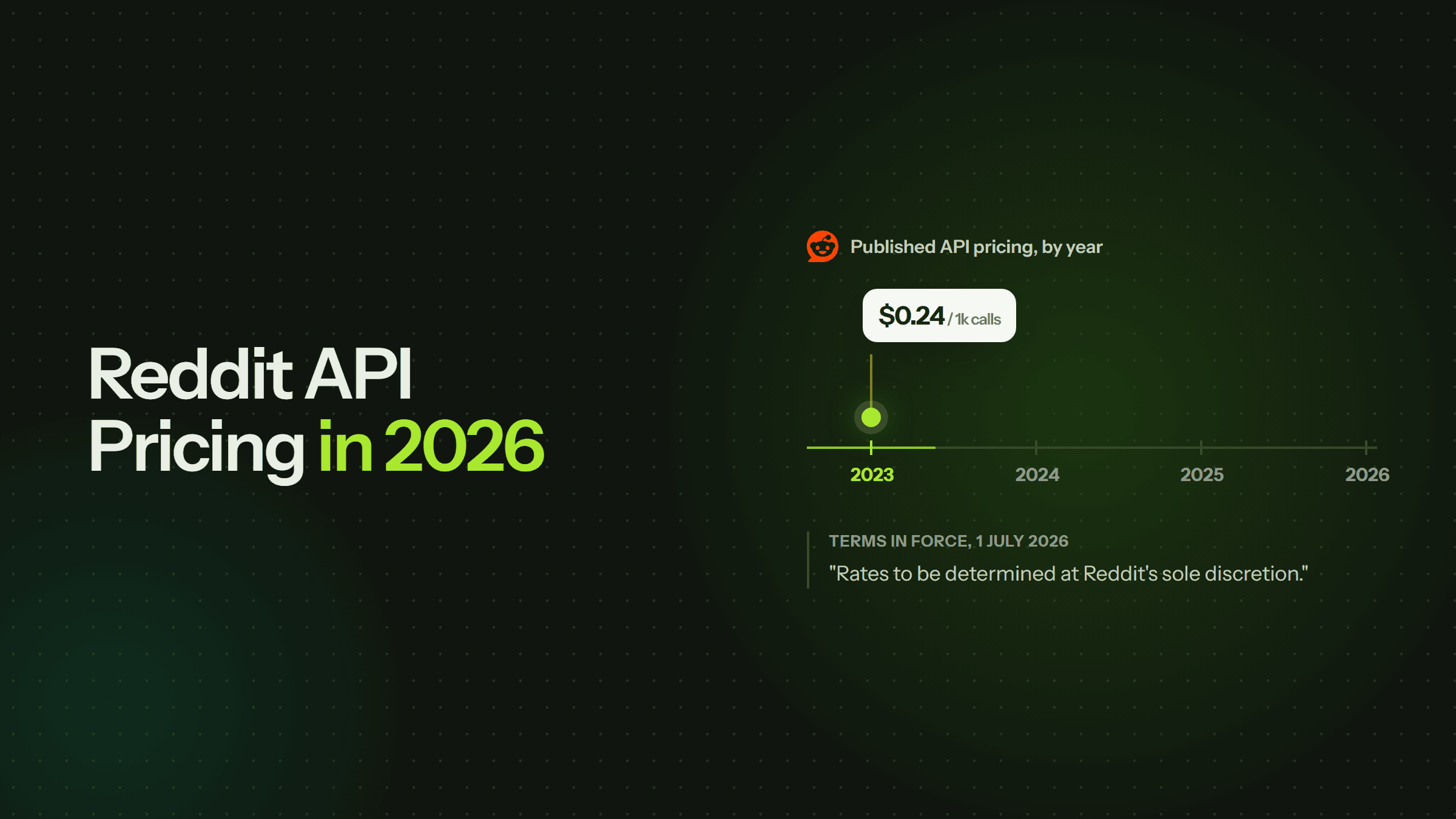
Reddit has published a price for its API exactly once, in June 2023. The terms in force today contain no price at all, only fees 'to be determined at Reddit's sole discretion'. What that means for anyone who just wants to watch their brand.
Read itBrand Management
The 10 Best Brand Monitoring Tools in 2026
Read itCompetitor Intelligence
10 Sprout Social Alternatives, and What Each One Actually Costs
Read it