Analytics & Reporting21 September 202610 min read
How to Measure Brand Awareness (Without a Survey)
A brand tracker costs real money, arrives six weeks late and measures a prompted moment. Meanwhile people search your name, argue about your category and leave you off shortlists every day. Four traces worth reading instead, and where a survey still wins.
 Anil SalviCMO and co-founder, BrandRobin
Every few quarters someone asks the marketing team to prove that brand awareness has gone up.
The usual answer is a survey. You pick a panel, write a questionnaire, ask a few hundred people whether they have heard of you, wait four weeks, and present a percentage. It costs real money, it arrives late, and it has the one quality executives like most: it produces a single number you can put on a slide.
It is also, in my experience, the least interesting evidence available to you.
Because while you were waiting for the panel, several thousand people typed your name into a search box, argued about your category in public, recommended a competitor to a stranger, and asked which tool they should buy. None of them were asked anything. All of them left a trace.
 Reddit
 LinkedIn
 X
X Quora
Quora YouTube
 Product Hunt
This post is about reading those traces, what each one can honestly tell you, and where a survey still does a job that behaviour cannot.
What a survey actually measures
Worth being fair to the method before arguing with it.
A brand awareness survey usually asks two things. Unaided recall: name the companies you can think of in this category. Aided recall: here is a list, which of these have you heard of. The gap between the two is genuinely informative, and unaided recall in particular is a hard, honest test.
The problems are not with the questions. They are with everything around them.
A survey measures a prompted moment. Someone who was not thinking about your category is asked to think about it, in an artificial setting, usually for payment. That is a real signal, and it is not the same as the moment a buyer is actually deciding something.
It also arrives late and at intervals. Four to six weeks from commissioning to presentation, once or twice a year if the budget allows. You cannot use it to answer "did that campaign do anything", because by the time the number lands, the campaign has been over for a month and something else has happened.
And it is expensive enough to be political. A number that costs thirty thousand pounds gets defended rather than investigated.
A survey tells you what people can recall when asked. Behaviour tells you whether your name came up when nobody asked.
Awareness is a trace, not an answer
Here is the reframe that makes the rest of this practical.
Awareness is not a thing that lives inside someone's head waiting to be questionnaire-shaped. It shows up as behaviour, and behaviour leaves records you can already see.
Someone who has heard of you does things a person who has not heard of you cannot do. They type your name. They mention it in a thread. They ask how you compare to something else. They arrive at your site without clicking an ad. Each of those is a trace, and unlike a survey response, every one of them happened because the person wanted something rather than because you asked.
That does not make behaviour better than a survey at everything. It makes it better at four things: it is continuous, it is cheap, it is unprompted, and it is available this afternoon.
The four traces worth tracking
If I were building an awareness picture for a company today without commissioning anything, this is what I would use and in this order.
- 01
Branded search volume
How many people type your name, your product names or your name plus a category word into a search engine. The closest thing to a free awareness meter that exists, because searching for you by name is something only someone who knows you exists can do.
- 02
Unprompted mention share
How often your name comes up in conversations you did not start, as a share of the conversations happening in your category. Not raw mentions. The share.
- 03
Presence in the consideration set
How often you appear in comparisons, alternatives threads and recommendation requests. This is the awareness that has actually reached the buying decision rather than sitting in the back of someone's mind.
- 04
Direct arrivals
People who reach your site with no referrer and no campaign attached. Noisy, easily overstated, and still meaningful when read as a trend over quarters rather than as a weekly figure.
None of the four is a complete answer. Together they cover most of what the survey was being asked to tell you, and they update every day.
Branded search is the closest thing to a free awareness meter
If you only take one thing from this, take this one.
Somebody typing your company name into Google has, by definition, heard of you. They are not being prompted, they are not on a panel, and they are not choosing from a list you wrote. It is as close to unaided recall as an observable behaviour gets, and Search Console reports it for nothing.
Two refinements make it far more useful than the raw line.
Split navigational from investigational. Queries that are just your name are navigational: people who already know you and want to get to you. Queries that are your name plus a word like review, pricing, vs or alternative are people evaluating you. The first line tells you about reach. The second tells you about consideration, and the second is the one worth showing a board.
Watch the ratio, not the total. If branded search grows 20% and your category grew 35% in the same period, you did not gain awareness. You lost ground during a rising tide and the absolute number congratulated you for it.
The number that separates known from considered
Being known and being considered are different states, and most awareness reporting cannot tell them apart.
A company can have decent recall and still never appear in the conversations where people are choosing. You are in the back of the room. Everyone would recognise your name, nobody brings it up.
This is why unprompted mention share matters more than mention volume. Raw volume rises with the category, with your own marketing, and with anything that makes people talk more this month. Share is the version of the number that survives context, and it is the one worth putting next to competitors on the same scale. We have written separately on what share of voice is and why it is not market share, which is the mistake that follows this metric everywhere.
RedditWe looked at four of these last year and ended up staying put, but honestly if I were starting again I'd shortlist the one everyone keeps mentioning here. Their docs are the only ones I could actually follow.
And then there is the signal nobody thinks to look for.
QuoraAbsentWhat are the best tools for tracking what people say about your brand? I've seen Brand24, Mention, Sprout and Talkwalker recommended. Anything else worth looking at before I commit?
The most useful awareness signal is the thread where your name should have come up and did not.
Those absences are findable. They sit in exactly the same conversations you are already monitoring for mentions, and they are the reason I would rather track a category than a brand name. A tool that only tells you about threads containing your name is structurally incapable of showing you the ones that should have.
Every awareness number is relative
This is the failure I see most, and it is worth stating plainly because it invalidates more dashboards than any other mistake in this post.
There is no good absolute value for any awareness metric. Not branded searches, not mention counts, not share. A number like "4,200 branded searches" means nothing until you attach two things to it: your own history, and the category's movement over the same period.
Consider two companies that both report branded search up 18% this quarter.
| Company A | Company B | |
|---|---|---|
| Branded search | Up 18% | Up 18% |
| Category search overall | Flat | Up 31% |
| What actually happened | Gained ground in a still market | Lost share in a growing one |
| Likely internal reading | Modest quarter | Great quarter |
| Correct reading | Great quarter | Warning sign |
Company B's marketing team will present that 18% and be congratulated. Nothing in their own data contradicts them. The only way to see the problem is to measure the category alongside yourself, which is the argument for tracking competitors on the same scale rather than as a separate exercise.
What makes awareness numbers useless
Four habits, all common, all fixable.
Reading a single week. Awareness moves slowly and weekly data is mostly noise. If your reporting cadence is weekly, your awareness metrics should still be read quarterly. Put them on a different page from the numbers that genuinely move week to week.
Crediting the campaign that happened to be running. Awareness changes lag their causes by weeks and sometimes months, and they move with seasonality that has nothing to do with you. A number that goes up during a campaign is not evidence the campaign did it, and treating it as proof is how budgets end up defended with coincidence.
Counting mentions as awareness. A spike in mentions can mean a campaign worked, or it can mean something broke. Volume on its own is the weakest number on any dashboard, an argument I have made at length in why mention counts lie.
Measuring only where you already are. If you track four channels and your category argues on a fifth, your awareness picture is confidently wrong. This is the same coverage problem that sits underneath brand monitoring, and awareness measurement inherits every gap in it.
What a survey still does better
I would not tell a company to cancel its brand tracker on the strength of this post, and it would be dishonest to pretend behavioural data covers everything.
The silent majority. Most people who know your brand never search for it, never post about it and never join a thread. Behaviour cannot see them at all. A survey can.
Demographics and segments. Behavioural data tells you that awareness moved. A survey can tell you it moved among finance directors in the Midlands and nowhere else.
Why, in their own words. An open-ended survey answer is a sentence written to be read by you. A thread is a sentence written for someone else. Both are useful and they are not interchangeable.
Comparability with the category's standard. If your board, your investors or your agency all think in terms of aided and unaided recall, a number in that currency is worth having whatever you think of the method.
The honest position is that these are complementary. Behaviour gives you the continuous line. A survey, if you can afford one occasionally, calibrates it.
How to start, in ninety days
- 01
Week one: connect what you already have
Search Console for branded queries, analytics for direct arrivals. Both are free and both are probably already installed. Export a baseline before you change anything.
- 02
Week one: name the category, not just the brand
Write down the category terms, the problem phrases and the four or five competitors you want measured on the same scale. Without this list, everything later is a measurement of yourself against yourself.
- 03
Weeks two to four: collect without concluding
Resist the first reading. You need enough history to know what an ordinary month looks like before any movement means anything, and a month is the minimum that is not noise.
- 04
Month two: split navigational from investigational
Separate the people looking for you from the people evaluating you. These two lines behave differently and averaging them together hides the more interesting one.
- 05
Month three: report the ratio, with the category line beside it
One page. Your trend, the category trend, your share, and the three threads that best explain the movement. A number with its evidence attached survives questions that a number alone does not.
Ninety days is not an arbitrary number. It is roughly the shortest period over which an awareness trend means anything at all, which is worth saying out loud to whoever asked for this by Friday.
What to show the people who asked for a survey
The practical problem is rarely the measurement. It is that someone senior asked for a percentage and you are proposing to hand them four lines on a chart.
What has worked, as far as I can tell, is not arguing about methodology. It is showing the same three things every quarter, in the same shape, so the trend becomes the story rather than the number.
The quarterly awareness page
- Branded search, split into navigational and investigational, against the same quarter last year
- Your share of category conversation, with the named competitors on the same scale
- How often you appeared in comparison and recommendation threads
- Three quoted conversations that explain what moved and why
- One line on what you are doing about it next quarter
That page costs nothing to produce once it is set up, and it answers the question the survey was commissioned to answer, with the added benefit that anyone can click through to the underlying conversation and check it.
Where BrandRobin fits
Two of the four traces need nothing from us. Branded search comes from Search Console and direct arrivals come from your analytics, both free, and any post that pretends otherwise is selling rather than explaining.
The other two are what we built for. Unprompted mention share and presence in the consideration set both require reading the category rather than your own name, across the places the category actually talks, and then holding your brand and your competitors in the same denominator so share means something.
That last part is the bit that is genuinely hard to do by hand. Counting your own mentions is easy. Counting them as a fraction of a category you have defined, week after week, on the same scale as four competitors, is the work.
Final thoughts
The reason brand awareness gets measured badly is not that marketers are lazy about it. It is that the honest version is slow, relative and hard to reduce to one number, and the dishonest version fits on a slide.
But the evidence is sitting there. People search for the brands they know. They name them in threads nobody asked them to join. They leave them out of shortlists they had every reason to include them in.
None of that requires a panel, a questionnaire or six weeks. It requires deciding to read what is already being written, measuring it against the category rather than against yourself, and being patient enough to look at it quarterly.
Stop asking people whether they have heard of you. Start counting the times they bring you up on their own.
Keep reading
Competitor Intelligence
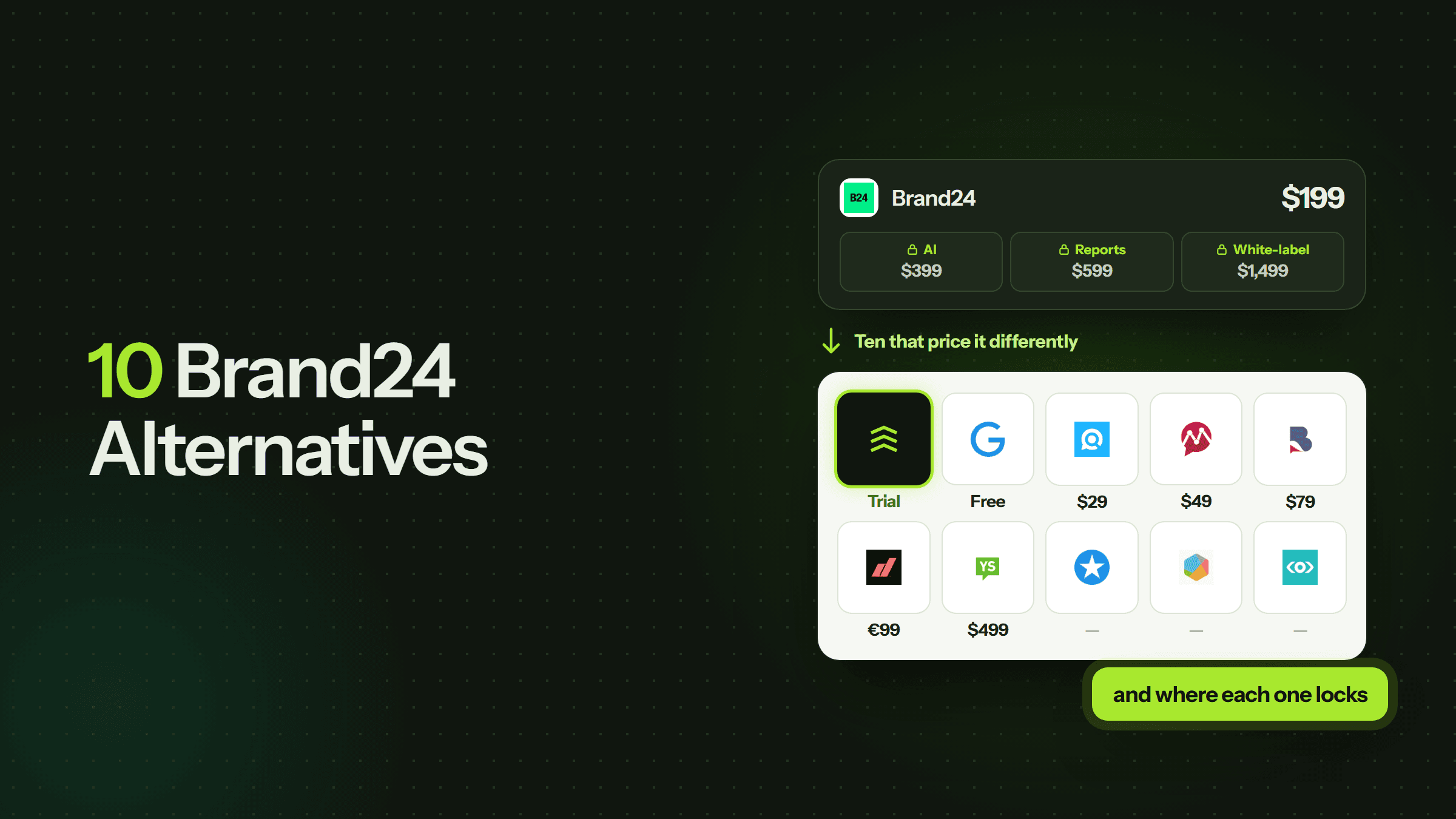
10 Brand24 Alternatives in 2026: What Each One Locks Behind an Upgrade
Read itMedia Monitoring
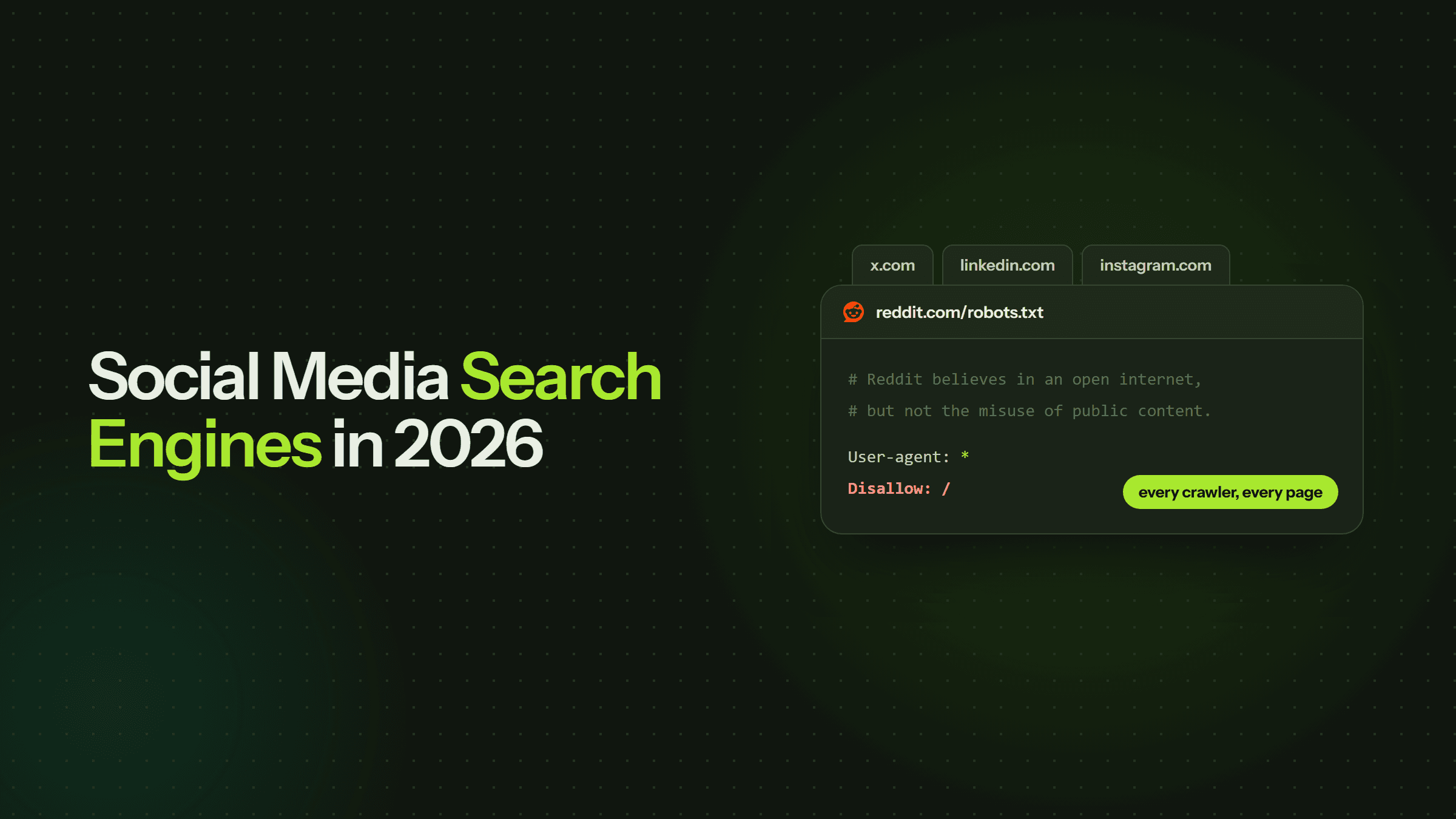
Social Media Search Engines in 2026: What You Can Actually Search
Reddit's instructions to every search engine are two lines long, and the second one is Disallow. What eight platforms permit, what you can still search for free, and the point at which searching stops being the right verb.
Read itPlatform Guides
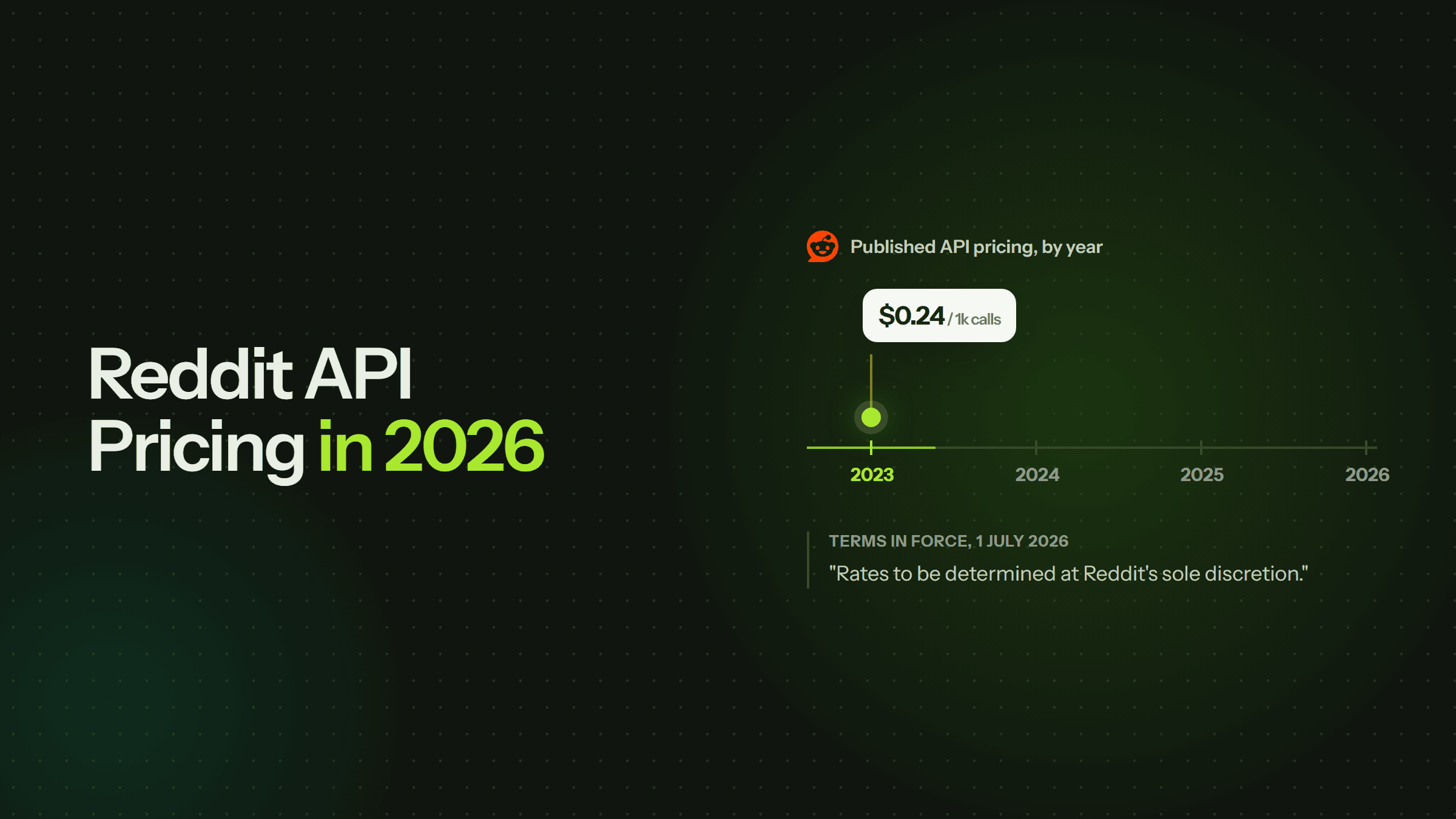
Reddit API Pricing in 2026: The One Number Reddit Ever Published
Reddit has published a price for its API exactly once, in June 2023. The terms in force today contain no price at all, only fees 'to be determined at Reddit's sole discretion'. What that means for anyone who just wants to watch their brand.
Read it