Social Listening19 September 202612 min read
What Is Social Listening? A Practical 2026 Guide
Your customers are already telling you what they like, what they hate and what they are comparing you against. A practical guide to finding those conversations, reading the patterns inside them, and turning them into decisions.
 Anil SalviCMO and co-founder, BrandRobin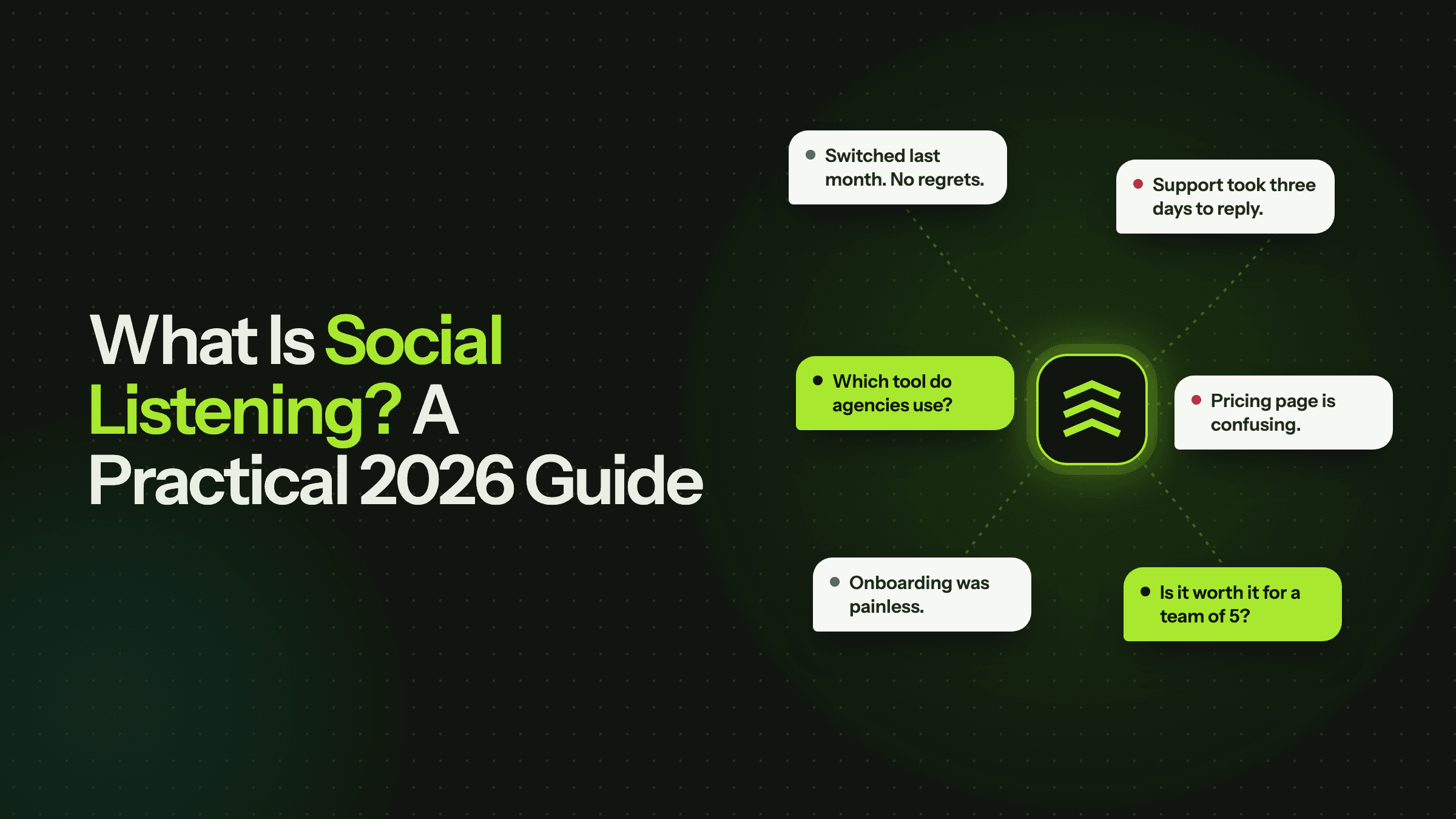
I have spent most of my career in marketing, and one thing I have learned is that companies often know a lot about their customers without really knowing what their customers think about them.
We look at website traffic, conversion rates, customer calls, NPS, reviews and social media analytics. We spend hours discussing positioning, messaging and campaigns. But there is another source of information sitting in plain sight.
People are already talking about your brand.
 Reddit
 LinkedIn
 X
X TikTok
 Hacker News
 Instagram
That is where social listening becomes interesting.
After years on the marketing side, and now building BrandRobin, I have started thinking about social listening less as a social media activity and more as a way to understand what is actually happening in the market.
Because your customers are already telling you what they like, what they hate, what they want, what they are comparing and sometimes even what they are planning to buy.
You just have to listen.
What is social listening?
Social listening is the process of finding conversations about your brand, products, competitors, industry and customers, then analysing those conversations to understand what they actually mean.
The important part is analysing.
Social monitoring tells you that someone mentioned your brand.
Social listening tries to understand why they mentioned it, what they were talking about, whether the same conversation is happening elsewhere, and whether there is a larger pattern behind it.
Imagine your company receives 5,000 mentions in a month. That sounds impressive.
Then you look closer.
The number 5,000 does not tell you much.
The pattern inside those 5,000 conversations does.
That is the difference between monitoring and listening.
Why social listening matters more in 2026
The way people discover and evaluate products has changed.
Google is still important, but it is no longer the only place people research what to buy.
People search Reddit for honest opinions. They read LinkedIn conversations before buying B2B software. They watch TikTok to discover products. They ask communities for recommendations. They read the comments under YouTube videos. They search X for real-time reaction.
That shift is measurable. In Sprout Social's Q2 2025 pulse survey, 37% of consumers said they go to social first when looking for product reviews and recommendations, and 76% said social content had influenced a purchase in the previous six months.
Among younger buyers the gap is starker: 41% of Gen Z respondents turned to social platforms first when searching for information, against 32% who chose a traditional search engine.
That changes the role of a brand.
Your website tells people what you want them to know.
Your advertising tells people what you want them to believe.
But conversations tell you what people actually think.
And those conversations do not need your permission.
Your brand is not only what you say about yourself
One of the biggest lessons I have learned in marketing is that there can be a wide gap between the way a company describes itself and the way customers describe it.
Companies spend months on positioning statements. They debate words. They create brand guidelines. They write taglines.
Customers do not necessarily use any of those words. They describe brands based on their own experience.
I saw this very early, with my father's decision to buy a Samsung refrigerator.
I was around ten. I remember asking him why he wanted Samsung.
His answer had nothing to do with Samsung's advertising or a positioning statement.
He said he had heard people around us saying Samsung refrigerators lasted for years. He pointed at our neighbour's fridge and said they had been using it for years without a problem.
That conversation stayed with me.
The brand was being built in my father's mind through another customer's experience.
A brand is not only what the company says. It is also what people repeat about the company.
That is what makes listening so powerful.
The conversations you do not see can be the most valuable
Say someone posts on Reddit:
RedditI'm looking for a good alternative to Salesforce. What are people using?
They do not tag Salesforce. They do not tag any competitor. But that conversation is highly relevant to every company in that market.
Or someone posts: "We moved away from X because it became too expensive."
Again, there may be no formal brand mention. But there is a lot inside that sentence.
There is a customer problem. There is a competitor. There is a reason for switching. And there may be buying intent.
This is why I do not think social listening should be limited to tracking @mentions.
If you only monitor when people tag your brand, you are listening to a very small part of the market. The more interesting conversations usually happen without the brand being mentioned at all.
Where are people talking about your brand?
Social listening is no longer limited to traditional social networks.
Depending on your industry, your most valuable conversations could be happening across LinkedIn, Reddit, X, Instagram, TikTok, Hacker News, Medium, review websites, forums and niche communities.
LinkedIn
For B2B companies, LinkedIn has become an important place to understand how customers and industry professionals think.
People openly discuss products, vendors, competitors, pricing, industry problems and their experiences with different companies.
And sometimes the comments are more valuable than the post.
A founder might publish something about a product, and the comments underneath contain dozens of opinions from people who have actually used it.
Reddit
Reddit is particularly interesting because people tend to be direct.
They ask for recommendations, share bad experiences, compare products and discuss alternatives without ever speaking to the company.
A conversation with 50 highly relevant customers can be more useful than a post seen by 50,000 random people.
RedditBuyer 88We trialled Brand24 and Mentionlytics last quarter. Brand24 covered more sources but the API was an extra $149/mo, which killed it for us. Anyone found something that includes the API on a normal plan?
X
X is useful for real-time reaction.
Technology, AI, startups, SaaS, finance and creator-led industries generate a lot of discussion here.
A product launch can trigger thousands of conversations within hours, and those conversations reveal what people liked, disliked or misunderstood.
Instagram and TikTok
These platforms matter most for consumer brands.
People do not always leave long written reviews. Sometimes the feedback is a comment, a reaction, a video, or a creator talking about a product.
In fast-moving categories, these conversations surface trends before traditional research sees them.
InstagramNegativehonestly the packaging change made it so much harder to open. third time I've said this and nobody from the brand has replied to anyone in these comments
Hacker News and niche communities
For technology companies, smaller communities can be extremely valuable.
A discussion involving 200 developers who are directly relevant to your product may tell you more than thousands of generic social interactions.
Hacker NewsSpikeWe moved off their API after the rate limits changed. Good product, but 500 requests a month is not a real API. It is a demo with a bill attached.
This is why I do not believe the biggest conversation is always the most important one.
Relevance matters more than volume.
What should you actually listen for?
If I were setting up social listening for a company today, I would not start with one giant search query.
I would break the market into different types of conversation.
- 01
The brand itself
Company name, product names, founder and executive names, common misspellings, and the different ways customers refer to the product.
- 02
Competitors
Not just their names, but the conversation around them. What do customers like? What do they dislike? Why are people switching? What alternatives come up?
- 03
The category
Where most companies miss an opportunity. If you sell CRM software, do not only track your own name. Track CRM software, sales automation, pipeline management and the problems your product solves.
- 04
Customer problems
Someone does not need to know your brand to become a customer. A post saying 'I can't find a good way to monitor brand mentions across Reddit and LinkedIn' is worth more than a passing mention of your company.
- 05
Buying intent
Looking for… Any recommendations? Alternative to… Best tool for… Should I use X or Y? Thinking of switching from… These reveal people actively trying to solve a problem.
A mention is not an insight
This is one of the biggest differences between social monitoring and social listening.
Imagine your dashboard says: "Your brand received 10,000 mentions this month."
That is data.
Now imagine it says: "Brand mentions increased 38% this month, primarily because customers are discussing pricing and comparing the product with two competitors."
That is an insight.
The first tells you what happened. The second gives you a reason to investigate.
This is the framework I keep coming back to:
Conversation → Pattern → Context → Insight → Action
A single Reddit post might not mean much.
But if 200 people are saying something similar across Reddit, LinkedIn and X, you probably have a pattern.
And once you understand why that pattern exists, you have something your business can act on.
The seven numbers I would watch
If I were building a social listening dashboard for a marketing team today, I would not start with 50 metrics. I would start with seven.
1. Mention volume
How many conversations are happening around your brand?
Do not automatically celebrate when this goes up. If mentions increase 300%, your campaign may have worked. Your product may also have broken.
Volume needs context.
2. Sentiment
Are conversations positive, negative or neutral?
Sentiment is useful for spotting broad changes, but I would never blindly trust a score. Sarcasm, humour and context confuse automated systems easily.
Treat it as a signal, not the final answer.
3. Share of voice
Suppose there are 10,000 conversations in your category and 1,500 mention your brand. That is roughly 15% share of voice.
Now you can compare that with competitors and understand how visible you are within the overall category conversation.
4. Conversation themes
The metric I find most useful.
Instead of knowing you received 10,000 mentions, you understand what they were about. Maybe 28% pricing, 18% support, 15% features, 10% competitors.
That tells your team far more than the total.
5. Emerging topics
Look for topics growing faster than normal. Something with 100 conversations last month, 250 this month and 700 the next.
Something is changing. The interesting question is not only what is trending, but why.
6. Competitor comparisons
How often are people mentioning you alongside competitors? Which companies are you compared with? What do customers say one does better than another?
These reveal positioning gaps that never show up in your own analytics.
7. Intent
Where this becomes valuable for revenue teams.
"I love this product" is useful. "I'm looking for an alternative because this has become too expensive" is a very different signal: a problem, context, and potentially buying intent.
Social listening is also market research
This is how I think about it most strongly today.
Traditional research asks people questions. Surveys ask what they think. Interviews ask about experience. Focus groups put people in a structured environment.
Social listening starts with conversations people are already having.
That difference matters.
Imagine asking customers: "What do you think about our pricing?" They know the company is asking.
Now compare that with someone posting: "This product is great, but I can't justify paying $500 a month for it."
They were not trying to provide market research. They were sharing an opinion.
That is what makes these conversations valuable.
I do not think social listening replaces surveys, interviews or customer research. It adds another layer.
Surveys tell you what people say when you ask. Social listening helps you understand what people say when you don't.
How I would build a social listening system
If I were starting from zero today, I would keep it simple. I would not begin by trying to monitor everything. I would start with one business question.
For example: why are customers choosing our competitors?
- 01
Create listening groups
Brand, competitors, category, customer problems and buying intent. Five groups, not one enormous query.
- 02
Find where those conversations live
A B2B SaaS company may care far more about LinkedIn, Reddit and X than Instagram. A consumer brand is often the reverse.
- 03
Remove the noise
Collecting more data does not create better insight. If 70% of your results are irrelevant, ten million conversations are not useful.
- 04
Look for patterns
What keeps coming up? What suddenly increased? What do customers repeatedly complain about, or consistently praise? Which competitor keeps appearing?
- 05
Decide what the business does about it
Onboarding complaints go to product and customer success. Praise for a feature goes to marketing. Constant competitor comparisons go to positioning.
Listening without action is just collecting data.
A simple example of social listening in action
Imagine a SaaS company launches a new pricing plan.
Social analytics show brand mentions up 40%. The marketing team reads that as a good sign.
Then they analyse the conversations.
A large part of the increase is people discussing the new pricing. Customers are comparing the company with a competitor. Several are asking for a feature that does not exist. And some existing customers are publicly discussing alternatives.
The dashboard says: "Mentions increased 40%."
Social listening says: "Conversations about pricing and competitors are increasing, and a missing feature keeps coming up."
The second version gives the company something to investigate.
That is the real value of listening.
How AI is changing social listening
This is where social listening has changed significantly.
Historically, teams created keyword searches and manually read through hundreds or thousands of conversations. That does not scale.
AI can now classify conversations, identify recurring themes, summarise large volumes of discussion, detect sentiment, identify competitors and surface unusual changes.
But I do not think AI removes the need for marketers. It changes what marketers spend their time on.
Instead of spending three hours finding patterns inside thousands of posts, you spend that time asking better questions.
The questions worth your time
- What changed?
- Why did it change?
- What are customers suddenly talking about?
- Why are people choosing our competitors?
- What problems keep appearing?
- What should our team pay attention to?
That is where social listening becomes much more powerful.
Social listening is becoming real-time market intelligence
I do not think social listening will stay a small function inside the social media team. It can become a source of market intelligence for the whole company.
Marketing can use it to understand brand perception and customer language.
Product teams can use it to identify feature requests and unmet needs.
Sales teams can use it to find buying conversations and competitor discussions.
Customer success can use it to spot recurring complaints.
Founders and CMOs can use it to understand how the market sees the company.
That is a much bigger opportunity than counting mentions.
The question is no longer "how many people talked about us today?"
The better question is: what is changing in the market, what are people saying about us, and what should we do about it?
Why we started building BrandRobin
This is the thinking behind why we started building BrandRobin.
After years on the marketing side, I wanted to build something around a very simple question:
What are people saying about your brand when you're not in the room?
BrandRobin is a social listening and brand monitoring platform built to help businesses track conversations across channels including LinkedIn, X, Instagram, TikTok, Reddit, Hacker News, Medium and more.
But the goal is not another dashboard full of numbers.
The goal is to help businesses find the conversations that matter, understand what people are talking about, identify patterns, and see how the market is changing.
Because when you can see what customers say about your brand, what they say about your competitors, and what problems they are trying to solve, you have information that influences far more than your social media strategy.
It influences your messaging. Your product. Your positioning. Your content. Your sales strategy.
And ultimately, how you build the brand.
Final thoughts
After years in marketing, I have realised that companies spend an enormous amount of time talking about customers and surprisingly little time listening to them at scale.
We create personas. We write positioning documents. We run surveys. We run campaigns. We analyse dashboards.
All of that matters.
But somewhere between all those activities, there is a very simple source of truth we overlook.
People are already talking.
They are talking about your brand. They are talking about your competitors. They are talking about your category. They are talking about problems they have not solved yet.
And they are telling other people what they think.
Social listening gives you a way to hear those conversations and turn them into something your business can understand and act on.
That is why I believe social listening in 2026 is much bigger than monitoring social media.
It is about listening to the market while the market is actually talking.
Keep reading
Brand Management
What Is Brand Monitoring and How Do You Start?
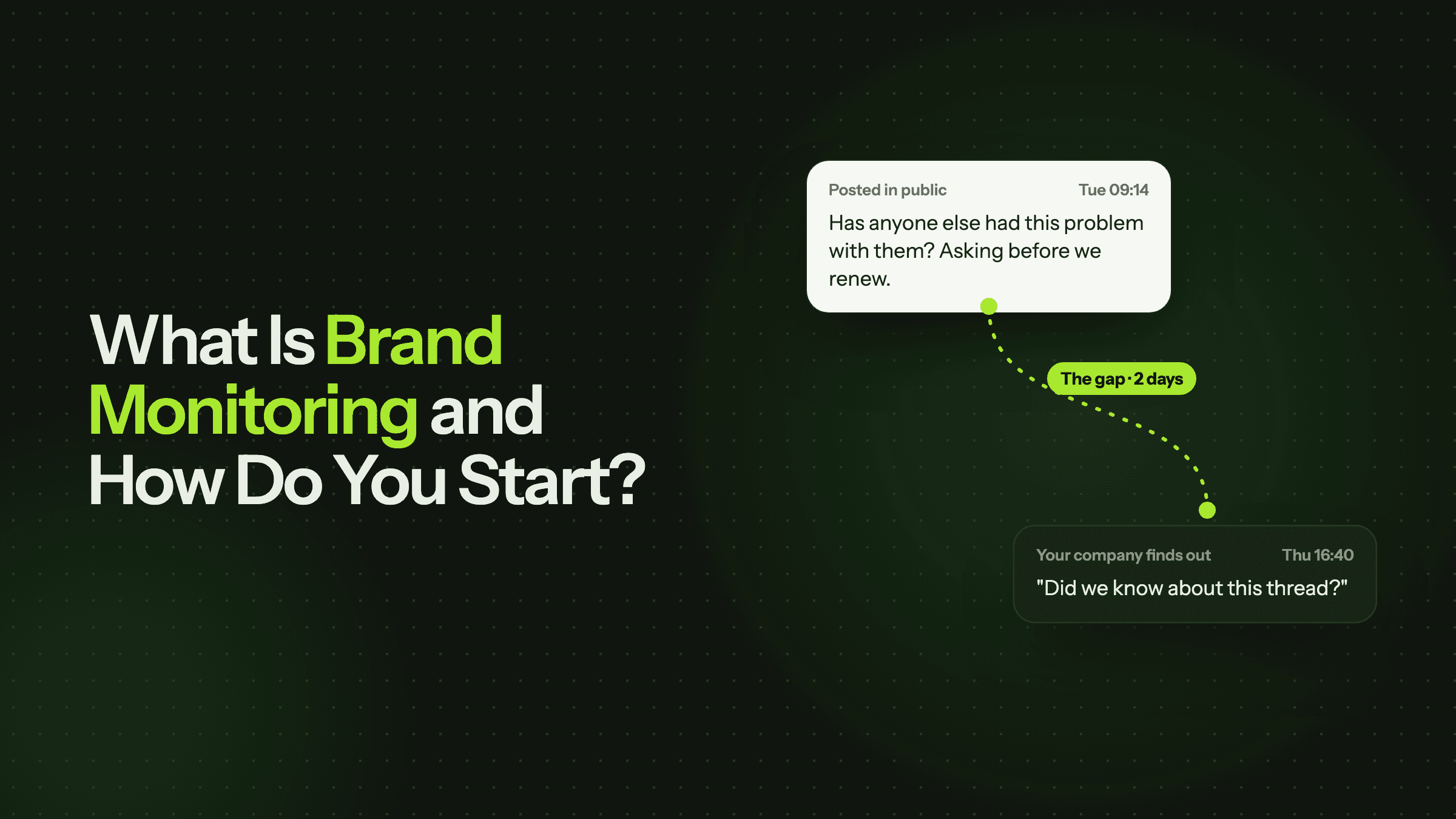
Most teams have alerts, not a record, and a tool with a blind spot reports silence exactly the way it reports a quiet week. What brand monitoring actually covers, how it differs from social listening, and a first week you can run before choosing a tool.
Read itAnalytics & Reporting
How to Measure Brand Awareness (Without a Survey)
A brand tracker costs real money, arrives six weeks late and measures a prompted moment. Meanwhile people search your name, argue about your category and leave you off shortlists every day. Four traces worth reading instead, and where a survey still wins.
Read itCompetitor Intelligence
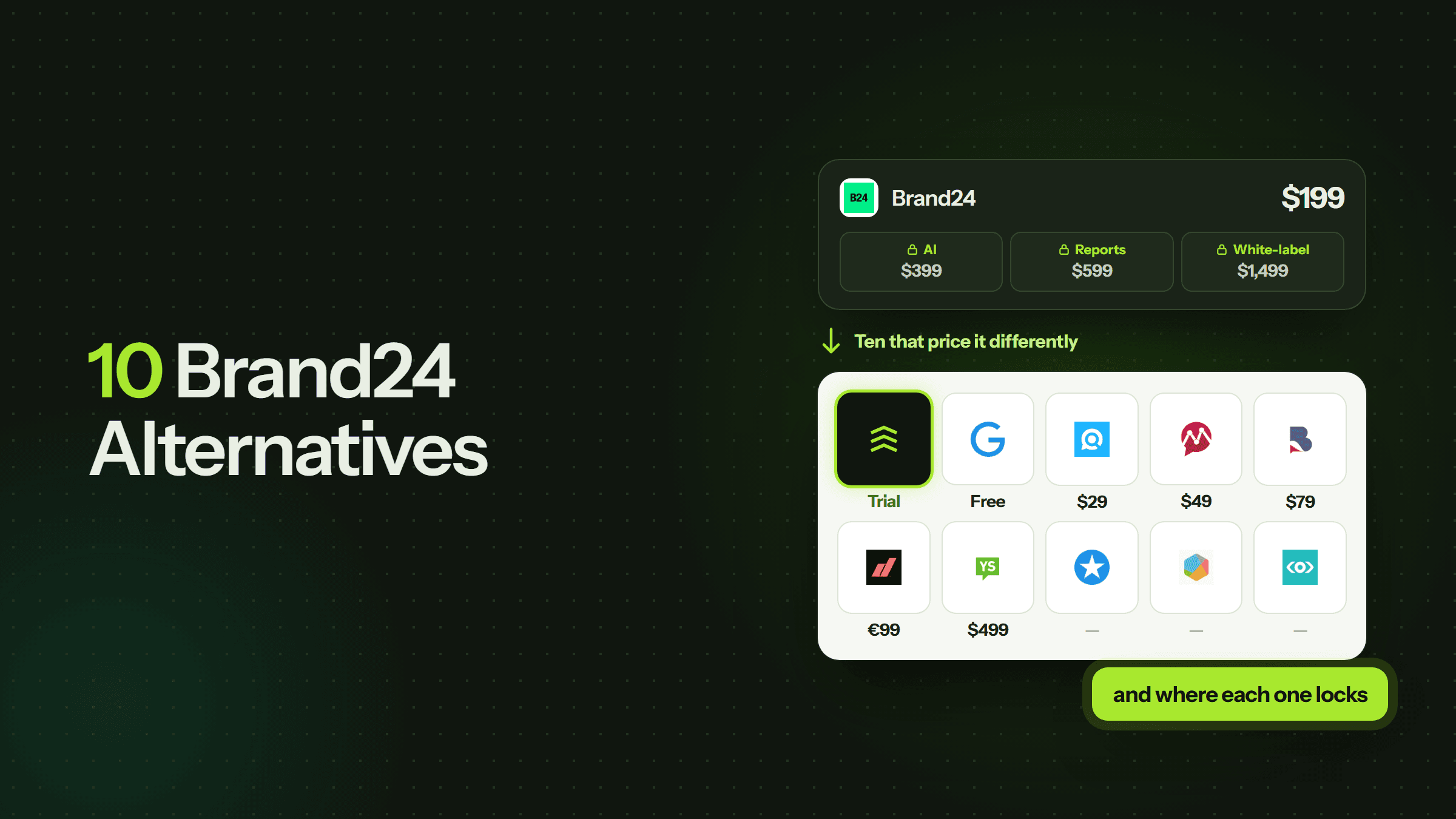
10 Brand24 Alternatives in 2026: What Each One Locks Behind an Upgrade
Read it